
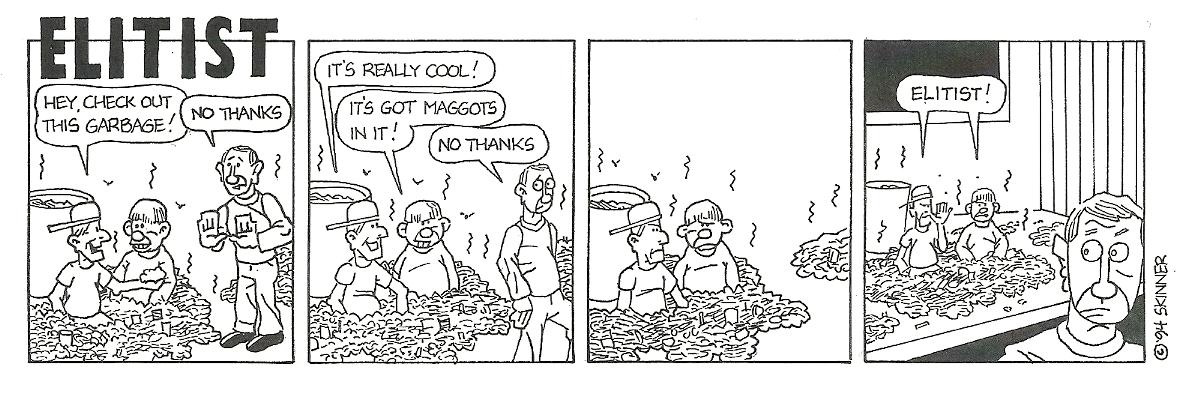
Elitist
May 23rd, 2013 · 2 Comments
→ 2 CommentsTags: *Cartoons · *Sketchbook · E
Radio
May 22nd, 2013 · Comments Off on Radio
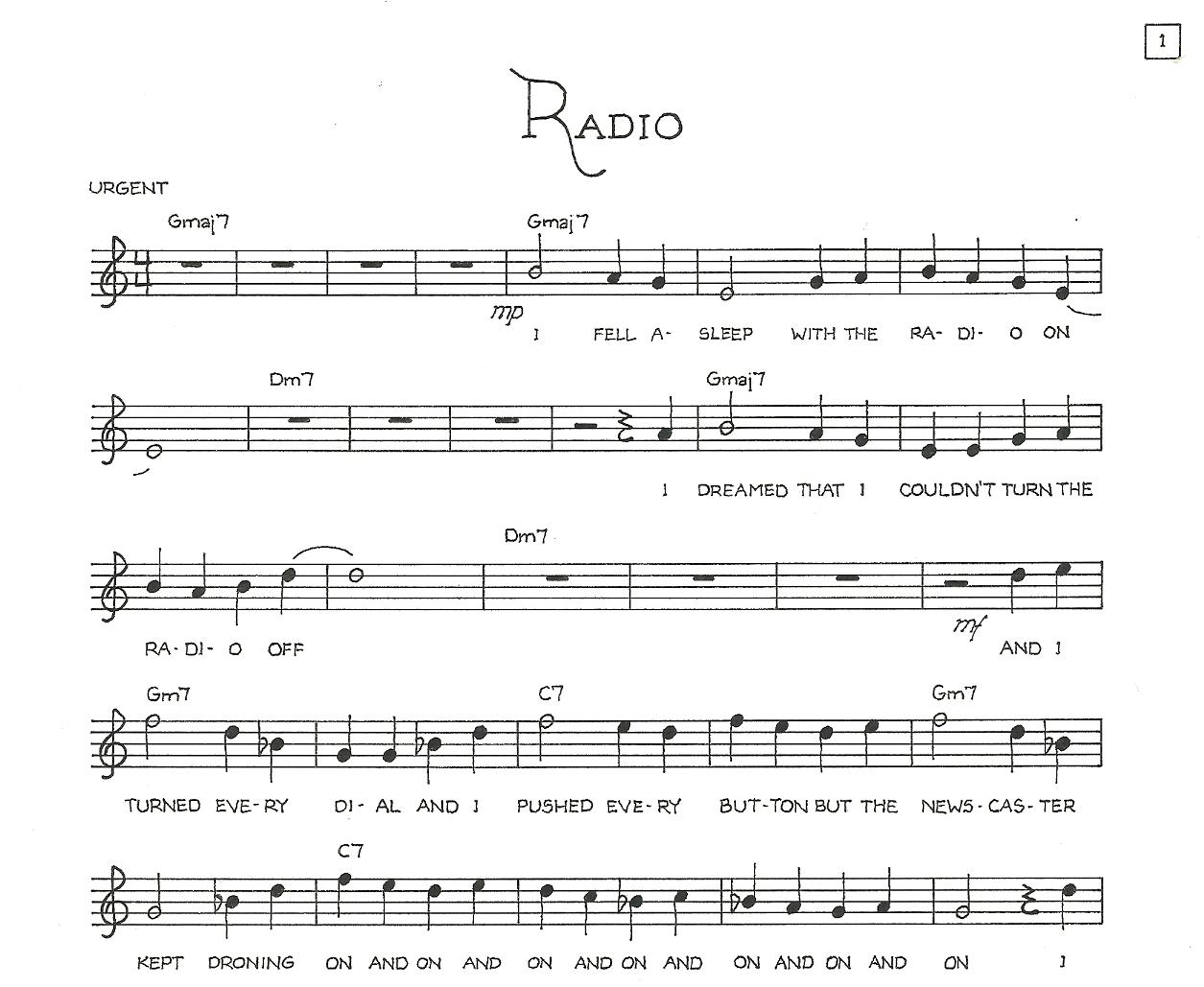
A song about falling asleep with the radio on. As the chorus reminds us, You’ve got to wake up to turn the radio off.
Comments Off on RadioTags: *Music · R
Index Cards (44)
May 20th, 2013 · 1 Comment
→ 1 CommentTags: *Index Cards
What You Cannot Eat You Can
May 16th, 2013 · 4 Comments
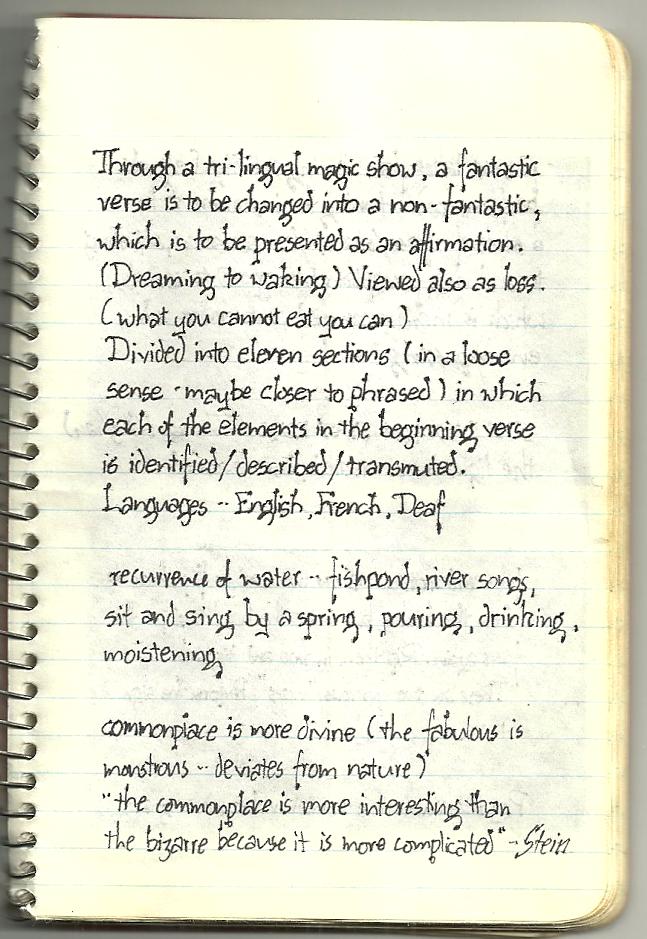
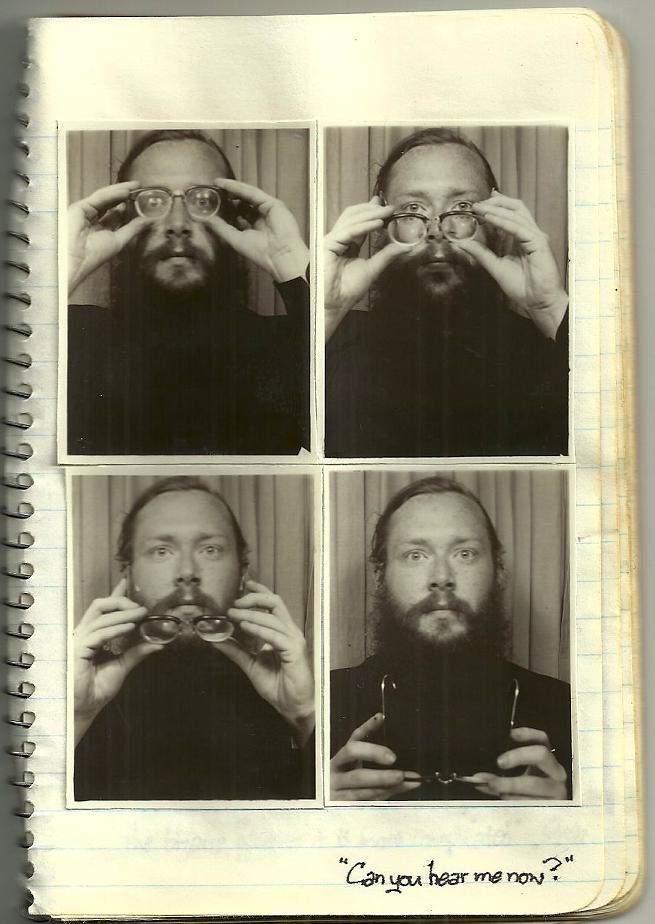
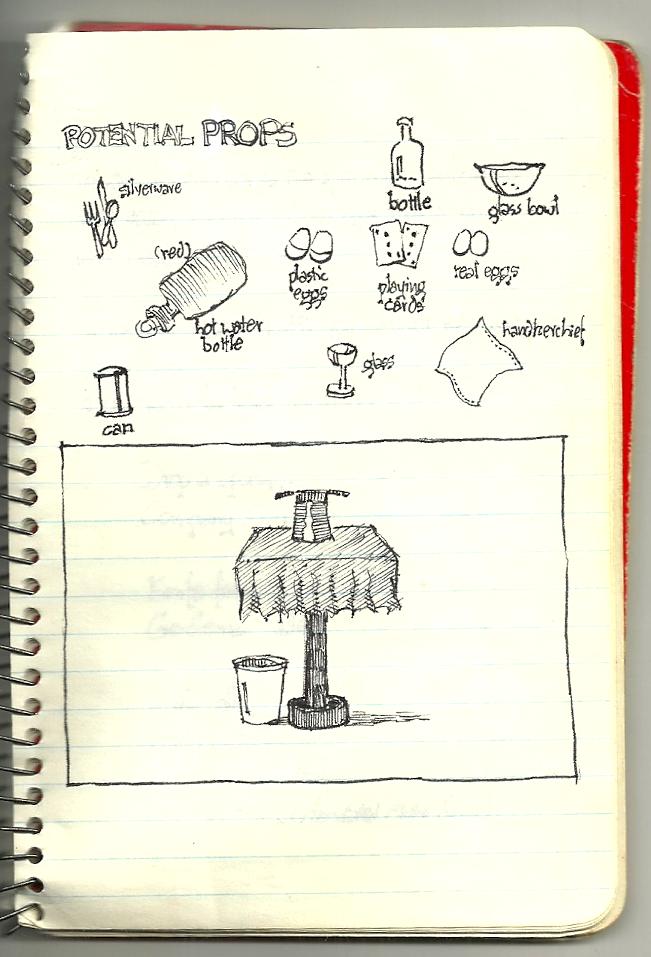
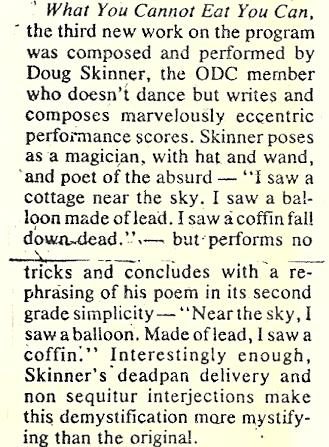
“What You Cannot Eat You Can” was a solo performance piece I did with the Oberlin Dance Collective back in 1977, out in San Francisco. It involved found verses, non-magic tricks, painted plastic eggs, and water; in the course of it, I changed a set of riddles into their answers. Here are a few pages from my notebooks for the piece, including a rare photo of my 1977 beard, followed by a review from Nancy Steele, The Daily Californian, 12/16/77.
→ 4 CommentsTags: *Stage · W
Index Cards (43)
May 13th, 2013 · 2 Comments
→ 2 CommentsTags: *Index Cards
How I Became an Idiot
May 9th, 2013 · Comments Off on How I Became an Idiot
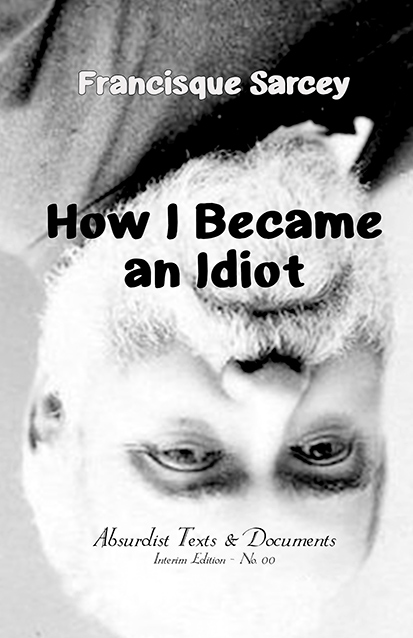
Francisque Sarcey (1827-1899) was, for much of his career, the most powerful theatrical critic in Paris. He was the perfect model of the blunt bourgeois, championing common sense, anti-intellectualism, and traditional values. He favored light, commercial fare, and railed against Ibsen and Jarry.
He was, predictably, a prime target for young artists. Alphonse Allais took the ridicule to new heights: from 1886 to 1893, he wrote a regular column for Le Chat Noir, which he simply signed as Francisque Sarcey. The pseudo-Sarcey became a grotesque caricature of the smug middle class, a sort of proto-Ubu: an obese, gluttonous, lecherous, hypocritical dolt, prattling on about his constipation and hemorrhoids, in loosely-knit sentences studded with clichés.
“How I Became an Idiot” collects four of Allais’s nastiest columns, translated, introduced and annotated by Doug Skinner. It’s available in a limited edition of 60 from Black Scat Books. None of this material has appeared in English before: snap one up!
Comments Off on How I Became an IdiotTags: *Words · H
Ding Dong Bell
May 8th, 2013 · Comments Off on Ding Dong Bell
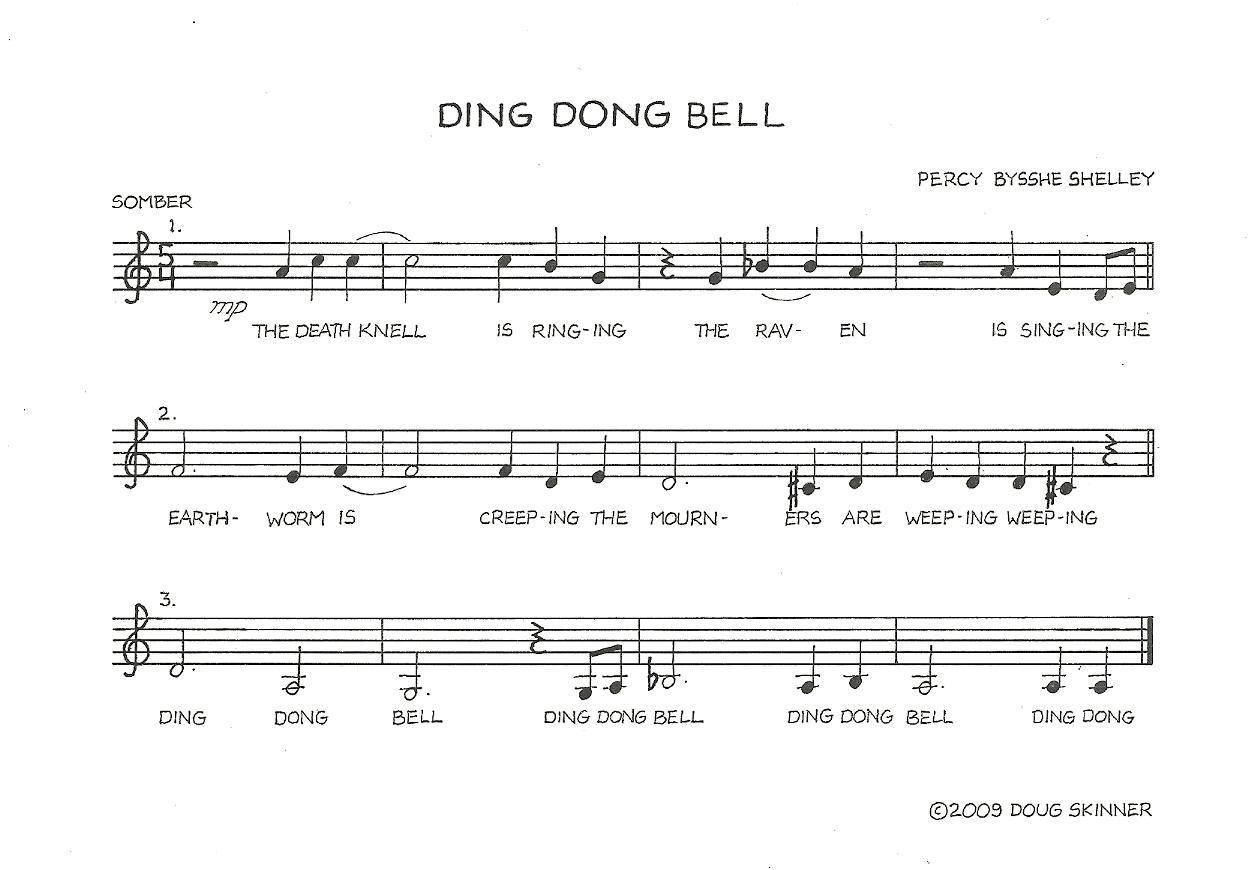
A melancholy scrap of Shelley; it seemed to call for an equally melancholy round in 5/4.
Comments Off on Ding Dong BellTags: *Music · D
Index Cards (42)
May 6th, 2013 · Comments Off on Index Cards (42)
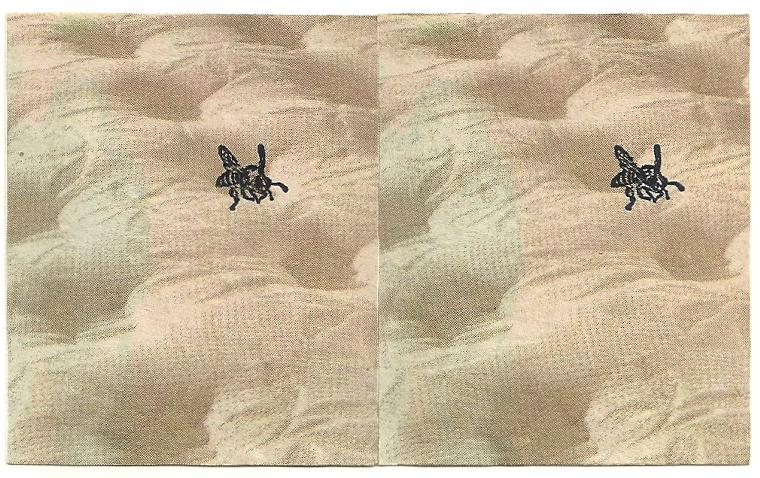
Some low-tech stereoscopy: cross your eyes to see the fly hover over the bed. It will probably work better if you click to enlarge it first.
Comments Off on Index Cards (42)Tags: *Index Cards
Button Button
May 3rd, 2013 · 2 Comments
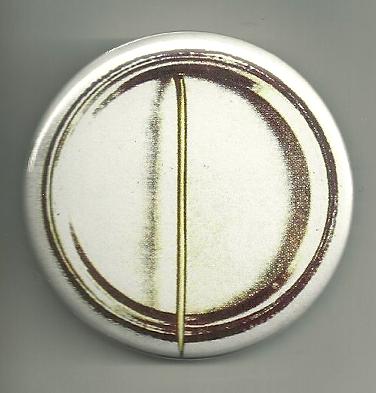
A button showing the back of a button, made on my handy home machine. Celebrate the other side!
→ 2 CommentsTags: *Other · B
Missing Persons Deck
May 2nd, 2013 · 2 Comments
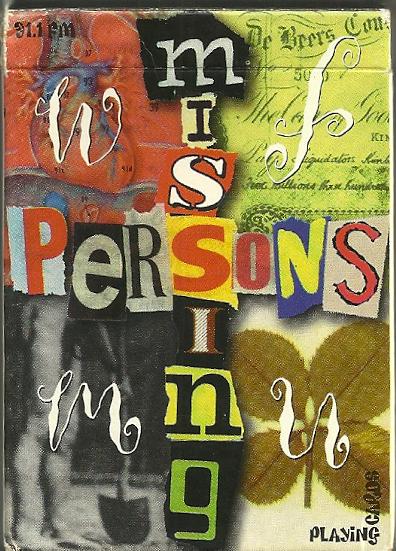
In 1996, listener-sponsored radio station WFMU issued a set of playing cards as a premium for subscribers. The theme was “Missing Persons,” and each card illustrated someone who had disappeared. I was assigned the clubs, and I drew each from the viewpoint of the person who vanished. The ace and face cards were drawn by other artists (George Erling, Krystine Kryttre, Diane Farris, Chris Ware); the box above was by Wm Graef. A 60 page booklet told the stories.
Here are my cards, with a key below (and, as always, I hope you realize that you can click to enlarge).
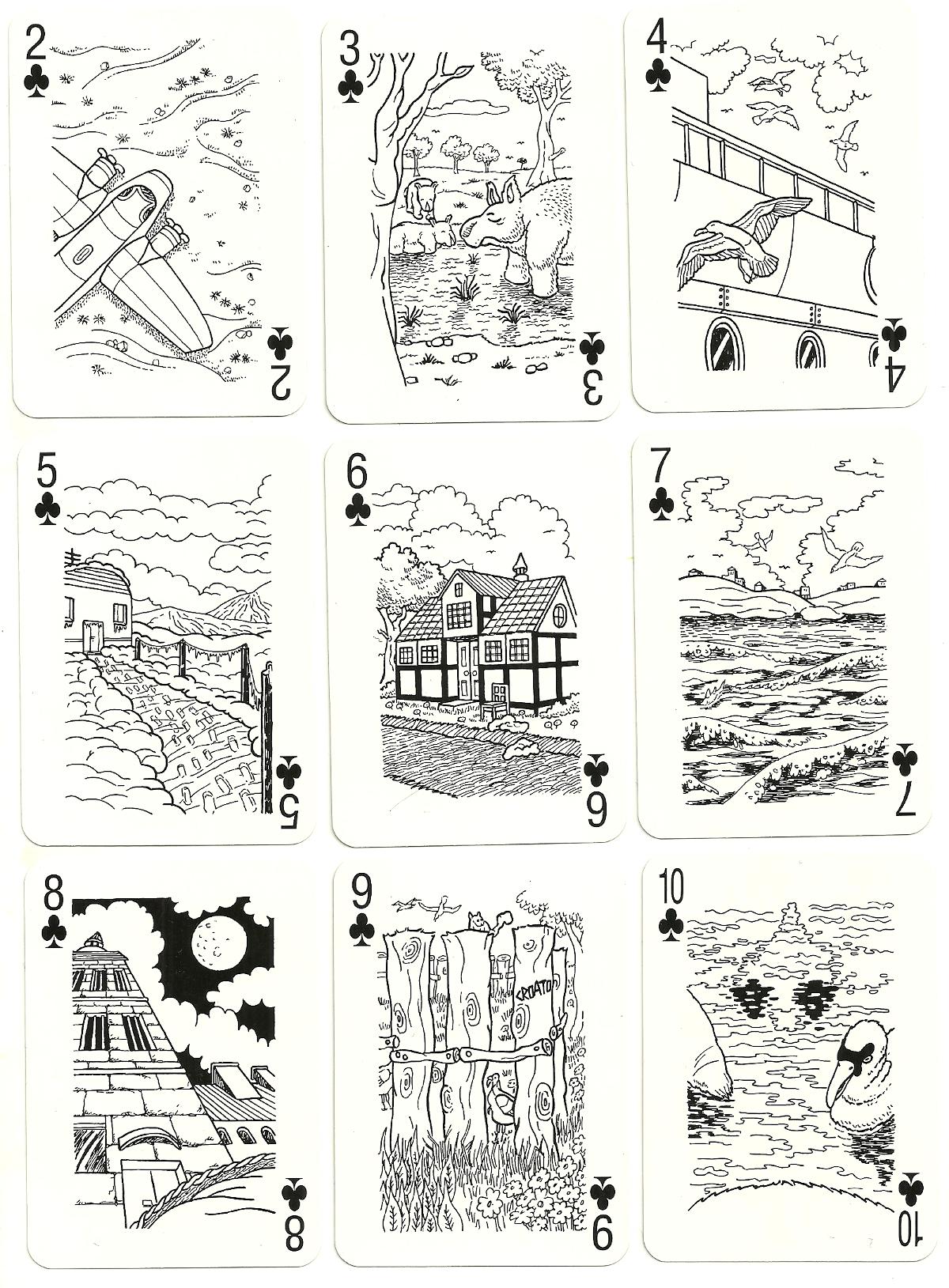
2: Karl Hunrath and Wilbur J. Wilkinson, UFO buffs who planned to meet with aliens from the planet Masar; their plane was found abandoned in the desert. (1953)
3: Dr. Ludwig Leichhardt, who never returned from searching for giant wombats in Australia. (1848)
4: Rudolf Diesel, who went missing on a ship crossing the English Channel. (1913)
5: Carl Robert Disch, who disappeared between two buildings in Antarctica. (1965)
6: Owen Parfitt, a elderly disabled man who vanished after his sister propped him up in a chair outside and went inside for fifteen minutes. (1768)
7: Harold Holt, Australian Prime Minister who never came back from a swim; a shark is suspected. (1967)
8: Louis XVII, the “lost dauphin,” shown here spirited away in a basket. (1792)
9: The Roanoke Colony, English settlers in North America, who abandoned their settlement, leaving a post inscribed with the word CROATOAN. (1590)
10: Dorothy Arnold, an heiress who disappeared among puzzling circumstances; Charles Fort suggested that she had turned into a swan. (1910)
→ 2 CommentsTags: *Cartoons · M

