A melancholy round, based on a traditional quatrain.
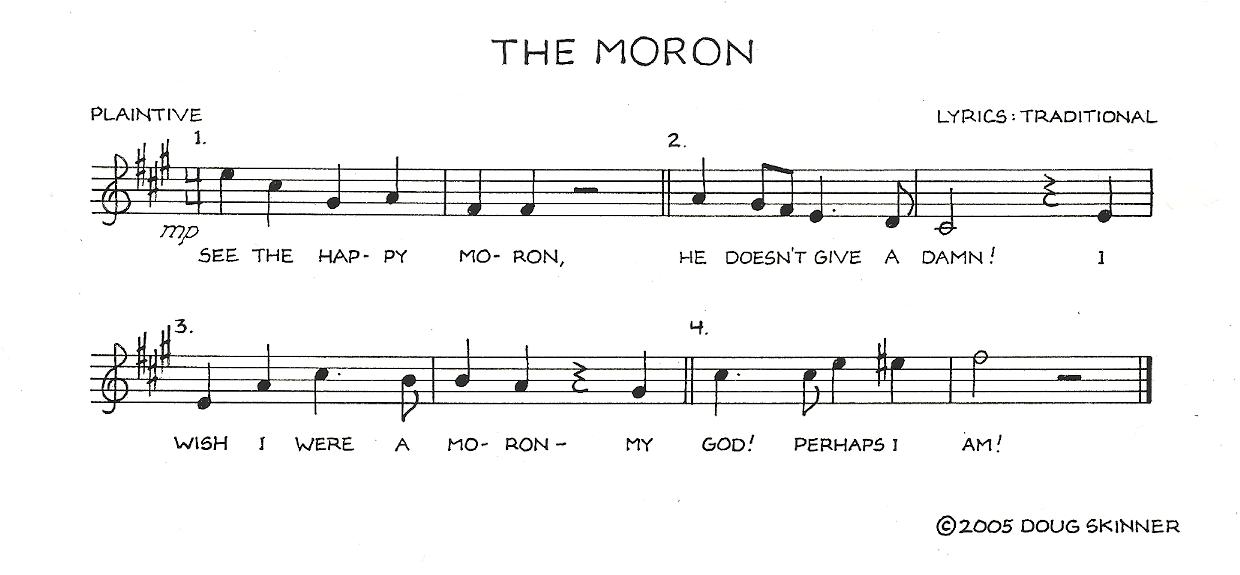

A melancholy round, based on a traditional quatrain.
Comments Off on The MoronTags: *Music · M
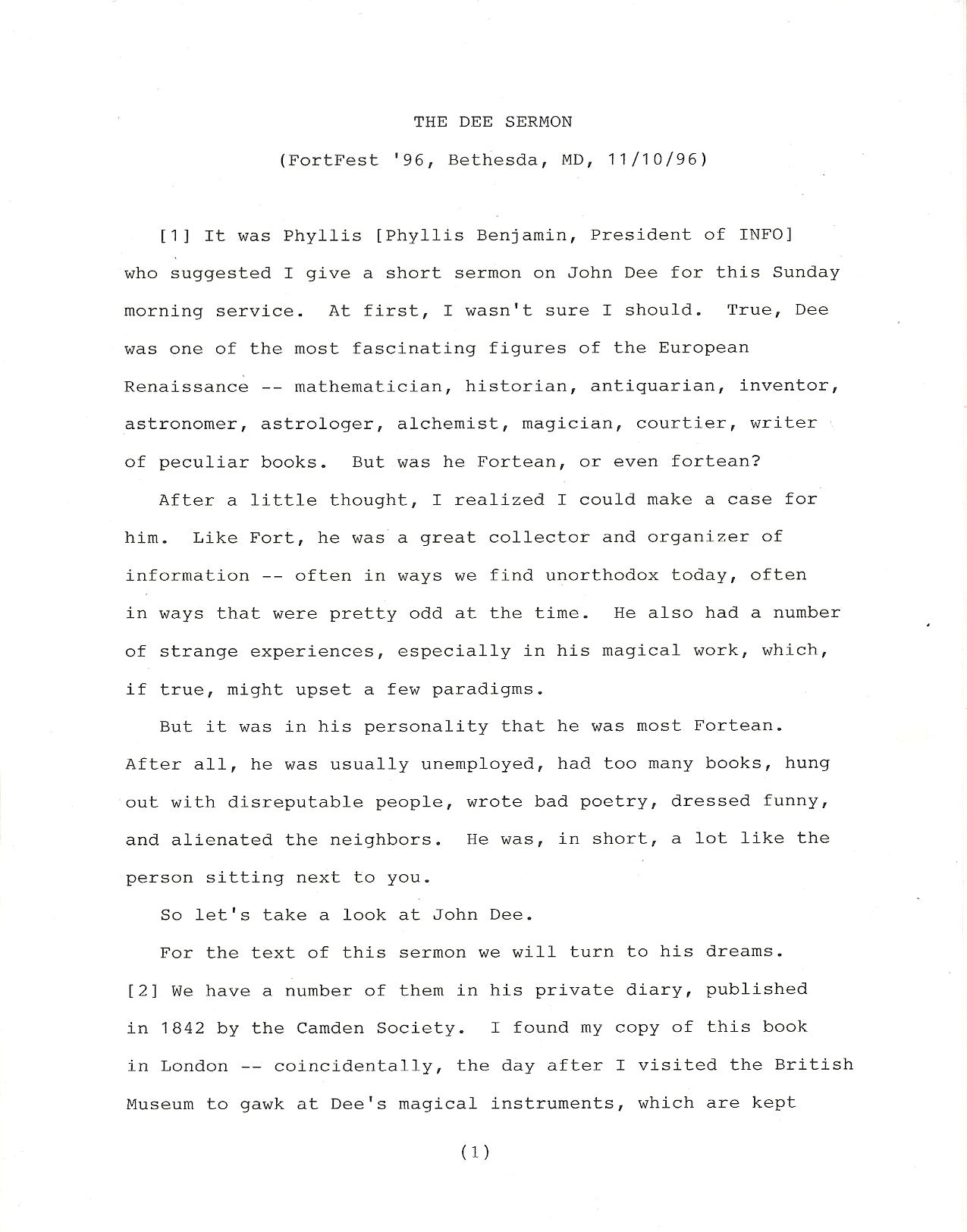
For the 1996 FortFest, the annual gathering of the International Fortean Organization, I delivered a talk on John Dee, that intriguing Elizabethan polymath. I had already composed and performed a song cycle based on Dee’s dream diary; so when Phyllis Benjamin, the head of INFO, suggested a Dee talk, I took his dreams as a framing device. Each dream generated a mock interpretation, which then bloomed into a consideration of one part of his life.
Here’s the first page:
Comments Off on The Dee SermonTags: *Words · D
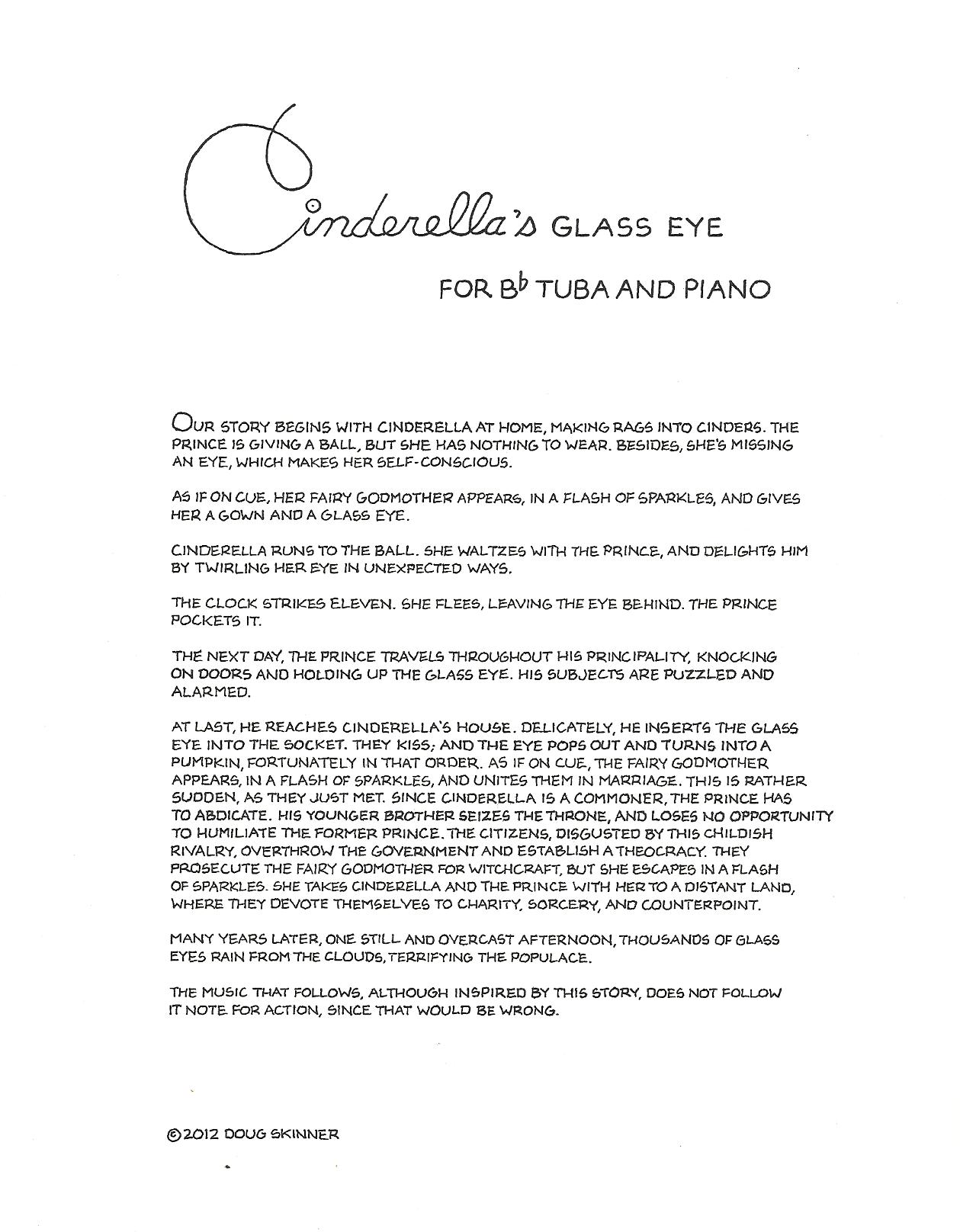
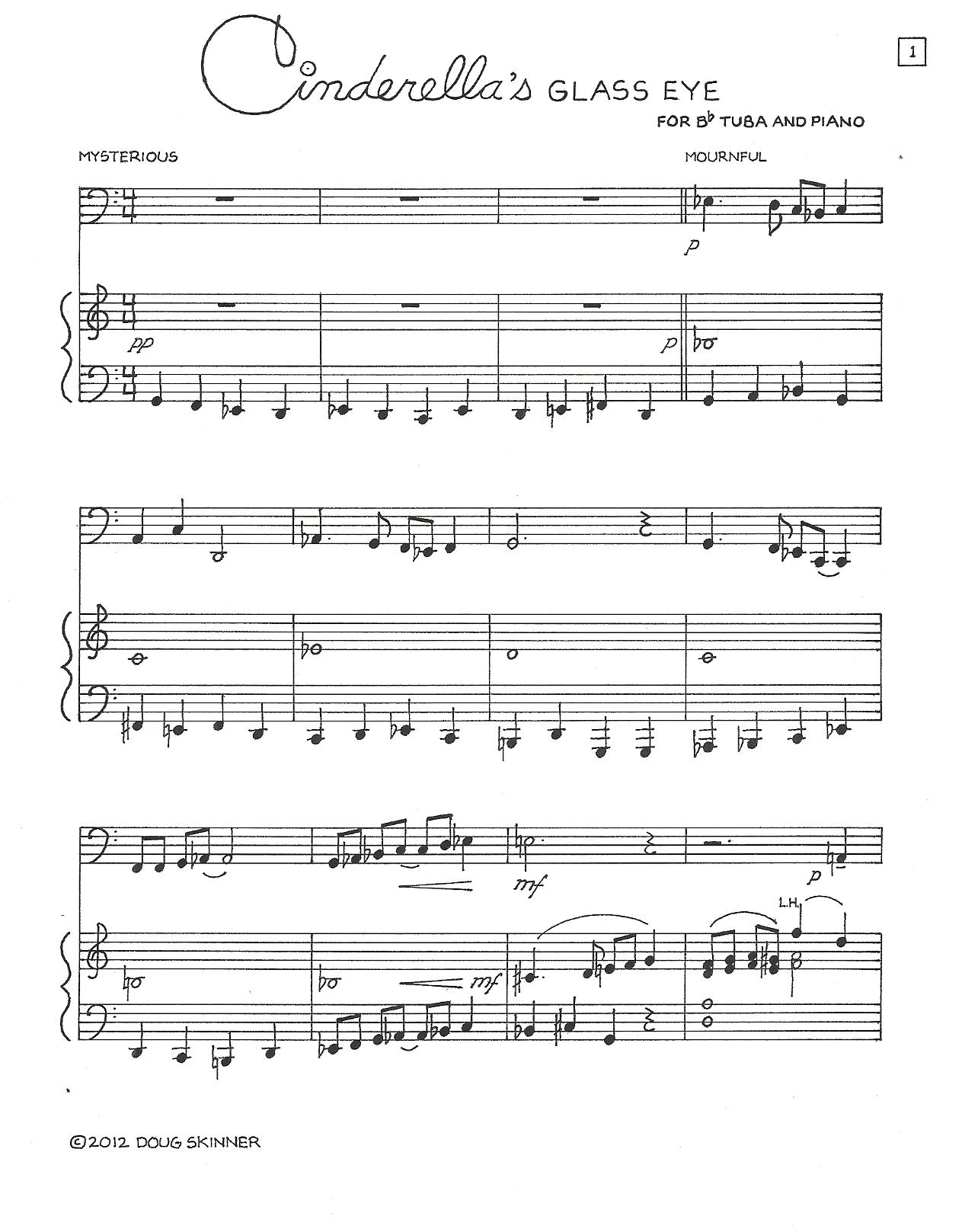
“Cinderella’s Glass Eye” is a bit of fairy tale music, scored for tuba and piano. There is a story to go with it; here it is. (Some readers have complained that the images are too small; let me remind them, gently, that you can enlarge a thumbnail by clicking on it.)
And here’s the brooding counterpoint that begins it, before the waltz.
Comments Off on Cinderella’s Glass EyeTags: *Music · *Words · C
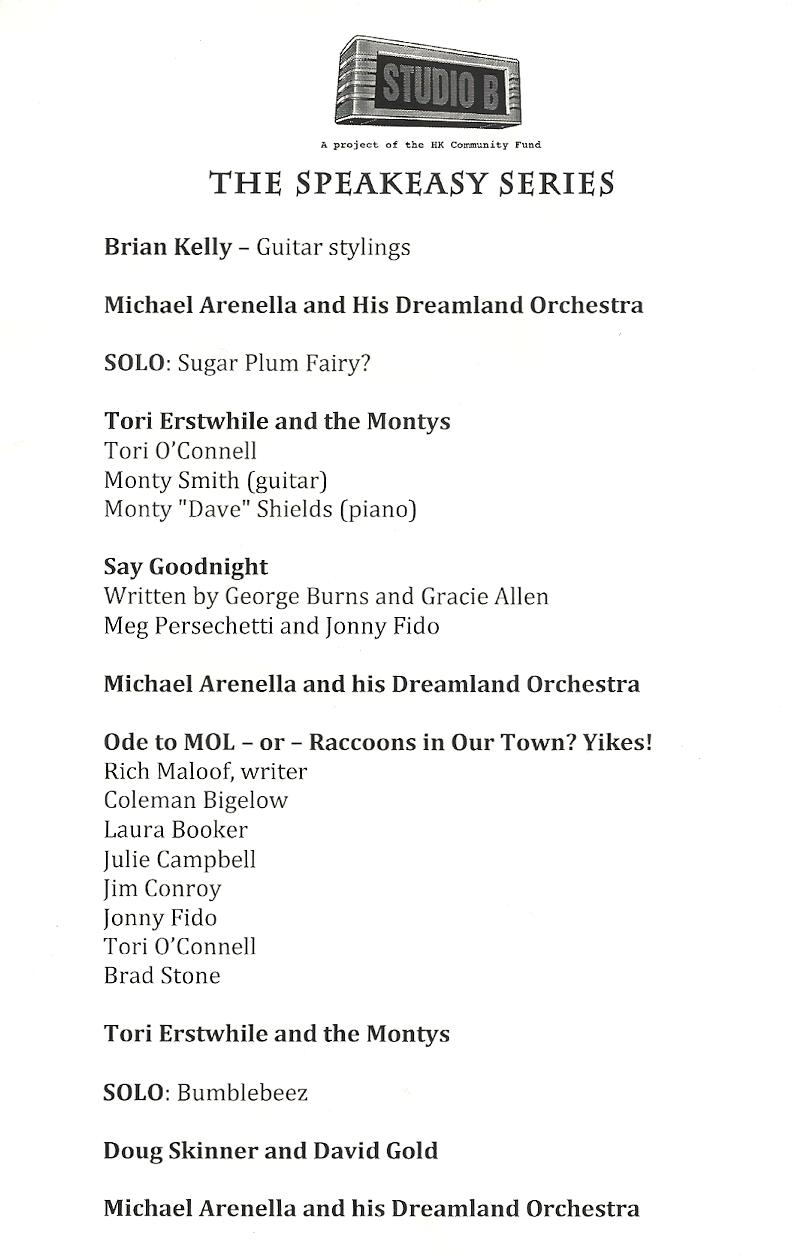
David Gold and I performed in “The Speakeasy Series,” produced by Studio B in Maplewood, NJ, March 24, 2012.
Our set:
Make a Wish
Never Shtup a Nutjob
Fa La La La La
The Gypsy (by Billy Reid)
Don’t Talk To Me
Good Night
Comments Off on The Speakeasy SeriesTags: *Music · *Stage · S
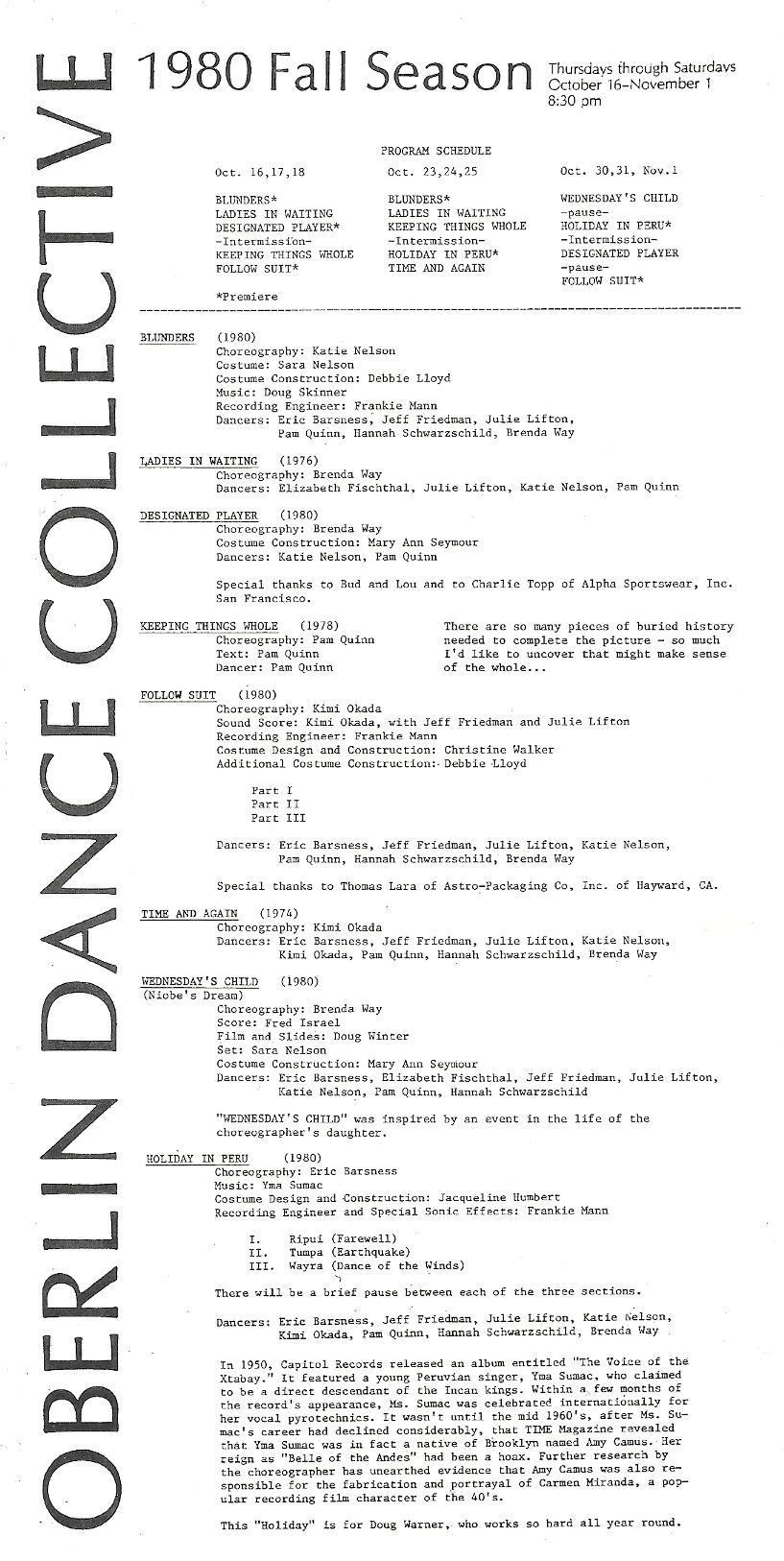
I wrote the score for Katie Nelson’s dance “Blunders” back in 1980. Frankie Mann recorded it; I played all the instruments, including piano, toy piano, ‘cello, organ, and percussion. Here’s the first page.

Comments Off on BlundersTags: *Music · *Stage · B
Matt Staggs interviewed me about my old friend, the inimitable John A. Keel, for his “Disinfocast.” You can listen to it here.
Comments Off on The DisinfocastTags: *Words · D
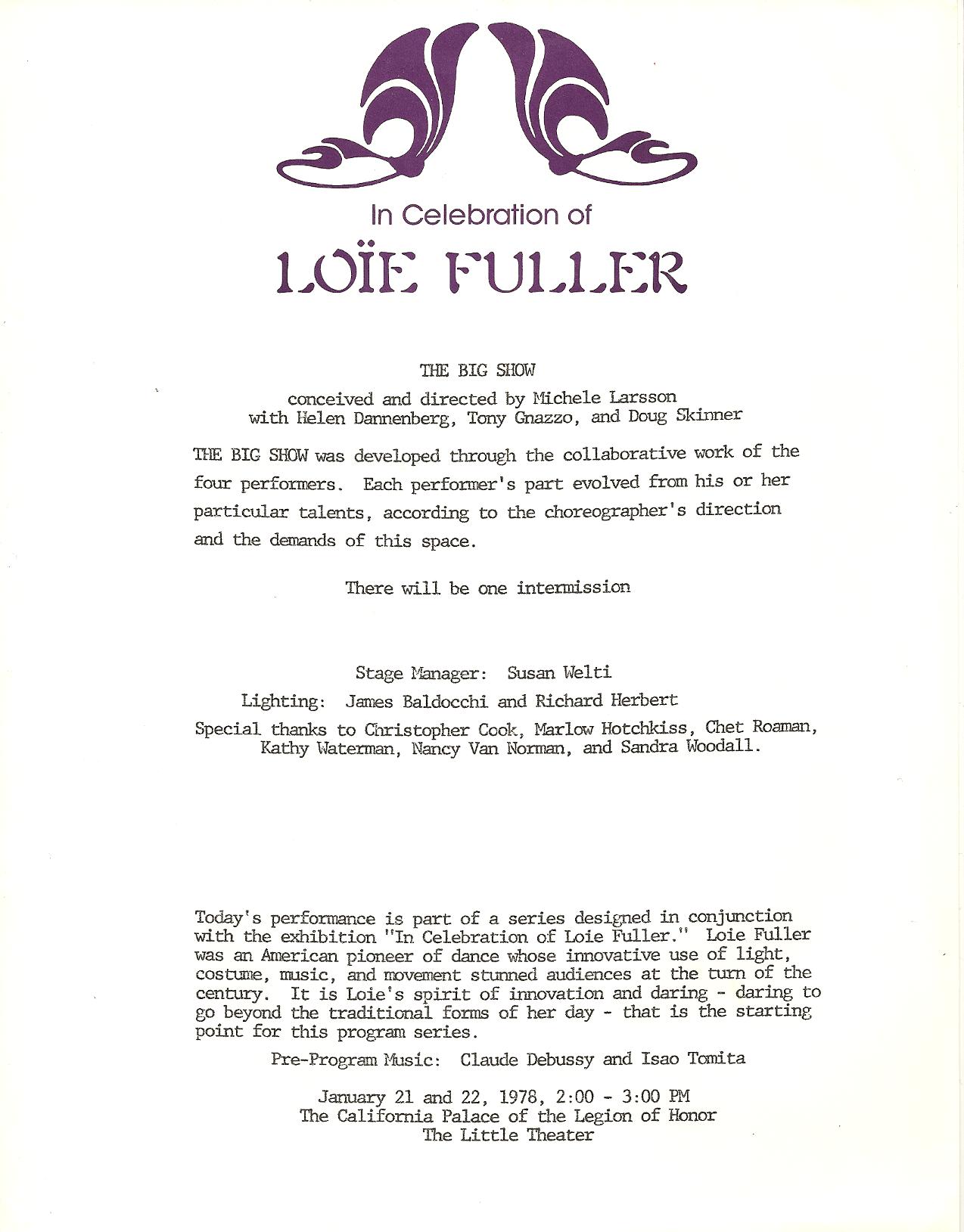
Michele Larsson put together The Big Show in 1978, in connection with an exhibit devoted to Loie Fuller at the California Palace of the Legion of Honor, in San Francisco. I provided music, which was mostly improvised, as I recall; Tony Gnazzo talked and rode an exercise bike; Helen Dannenberg and Michele danced.
Comments Off on The Big ShowTags: *Music · *Stage · B
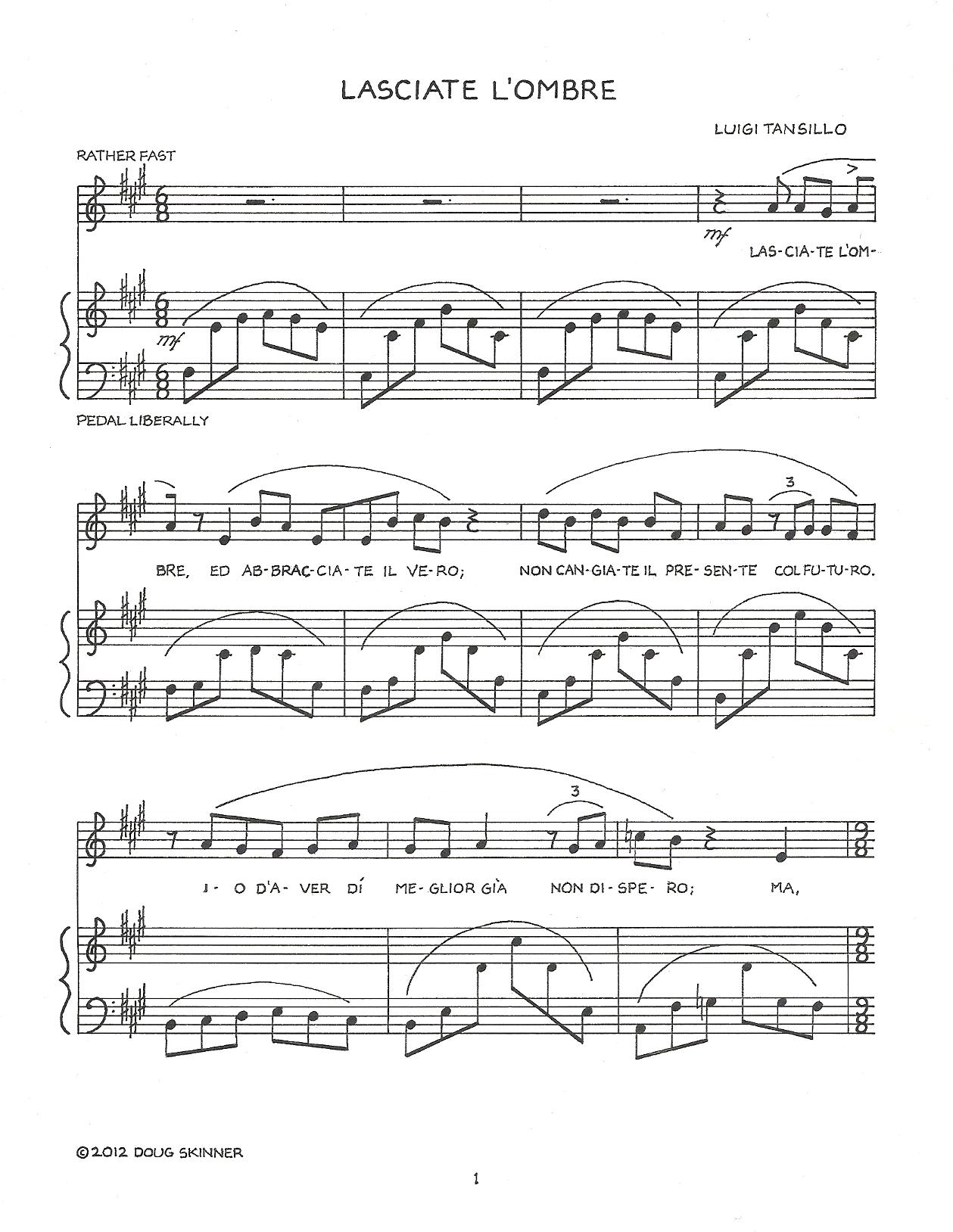
“Lasciate l’Ombre” is a setting of an excerpt from Luigi Tansillo, as quoted by Giordano Bruno in La Cena de le ceneri. A bit of research reveals that Bruno’s citation differs from Tansillo’s original poem. Duly noted. My setting is based on the randomized four-pitch diatonic chords that I’ve used in several pieces.
My translation of the text:
Leave the shadows and embrace the truth;
Don’t exchange the present for the future.
I don’t despair of a better day:
But, to live with more joy and security,
I enjoy the present and hope for the future.
Thus I enjoy double sweetness.
Comments Off on Lasciate l’OmbreTags: *Music · L
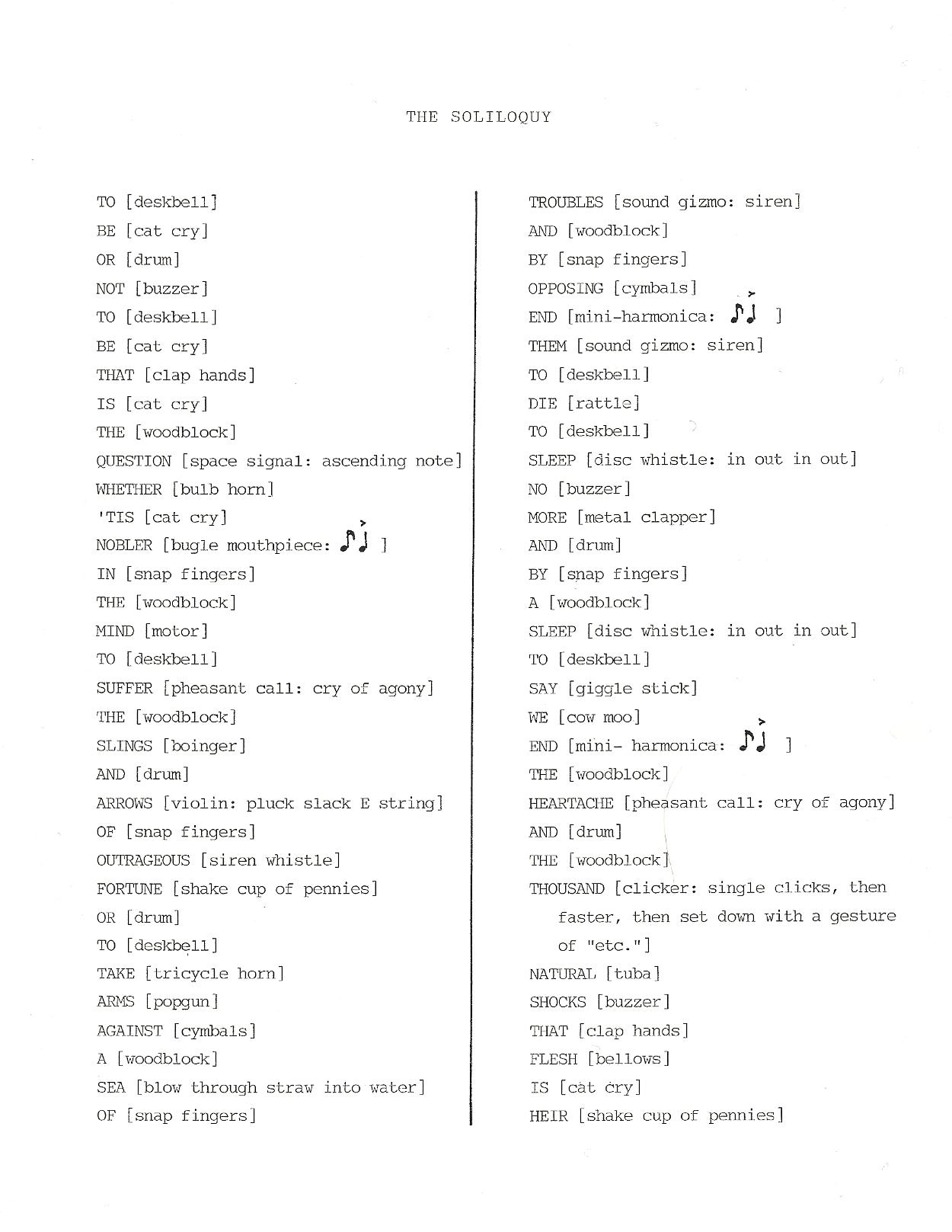
Back in 1988, I used to perform this version of Hamlet’s soliloquy, in which each word is followed by a cartoonish sound effect. It was, I recall, fun to perform, difficult to memorize, and took a long time to set up. Here’s how it begins.
→ 1 CommentTags: *Music · *Stage · S
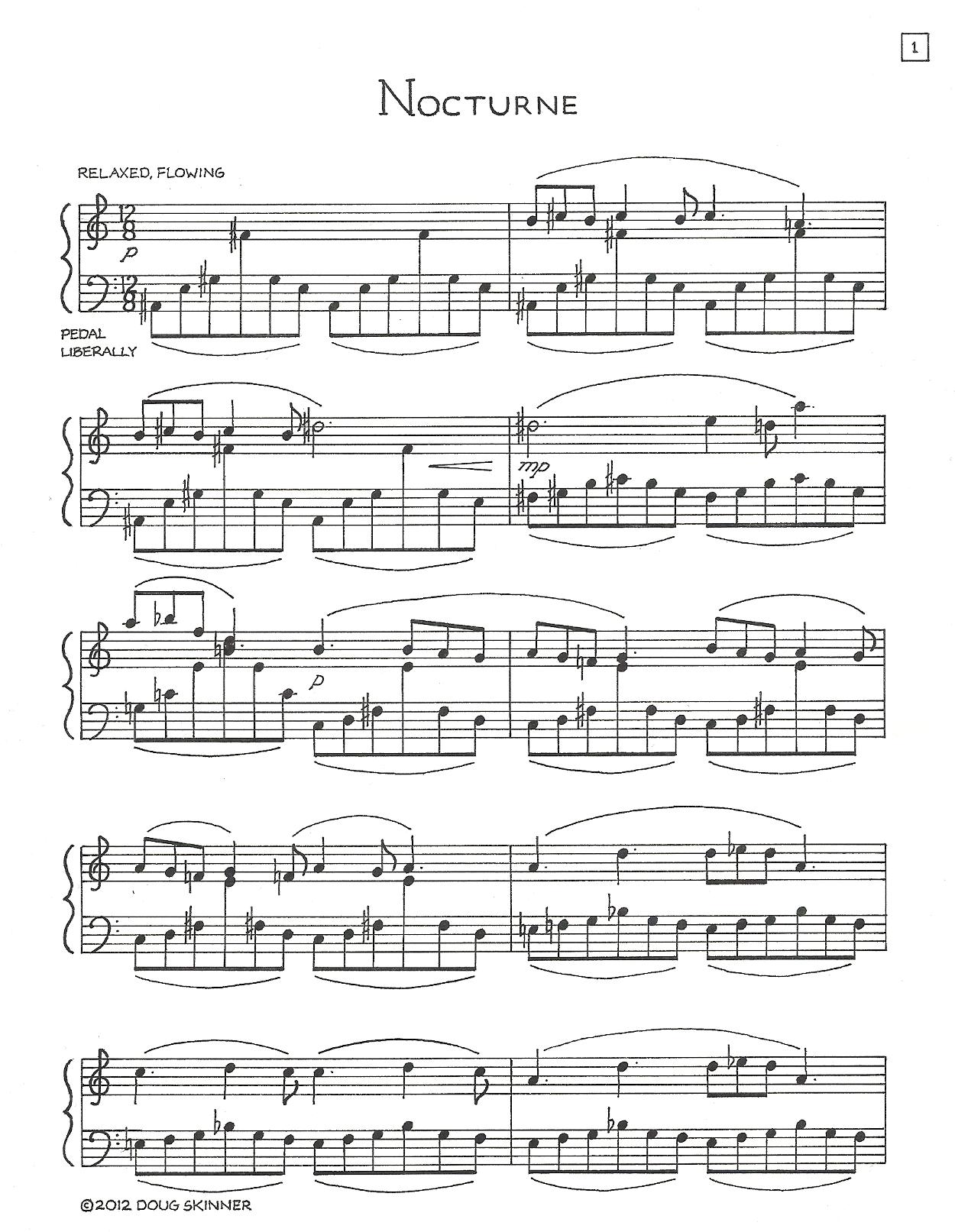
The “Nocturne” is based on the randomized diatonic four-pitch chords I’ve used in several pieces. Seven of these chords were used for the left-hand part. A set of seven numbers gave the number of repetitions of each chord (6215734) and the key of each chord (7623154: BECGFAD). They were then arpeggiated, in the familiar nocturnal 12/8. The right hand part was written from the three remaining pitches in each key, plus the flatted seventh, thus giving the eight pitches of two adjacent keys (B+E, E+A, C+F, etc.). The second part of the nocturne repeats the process with different chords, repetition sequence, and key sequence; with the key sequence darkened by dialing it over a couple of stops on the circle of fifths: E♭+A♭, A+D, G+C, F+B♭, B♭+E♭, D+G, C+F.
You can hear it on Bandcamp, over here.
→ 1 CommentTags: *Music · N